






Why Data Warehouse?
Data Warehouse organizes your player and event level data, refreshed daily, so analysts and engineers can skip infrastructure headaches and dive straight into insights.
Advanced SQL Analysis
Run powerful queries without building custom SDKs, data pipelines or storage infrastructure.
Ready-To-Query Data
Skip months of work. Data is clustered and partitioned for cost-efficient querying, and transferred in just days.
Historical Depth
Access 12 months of historical player and event level data, with flexibility to copy and keep it for longer.
Flexible Integrations
Blend multiple data sources. Combine with attribution, monetization, or 3rd-party datasets for deeper analysis.

Built for advanced insights
Whether you’re profiling users, running A/B tests, or modeling churn, Data Warehouse is built to support it all. Explore some of the use cases our customers put into practice.
Custom user profiling
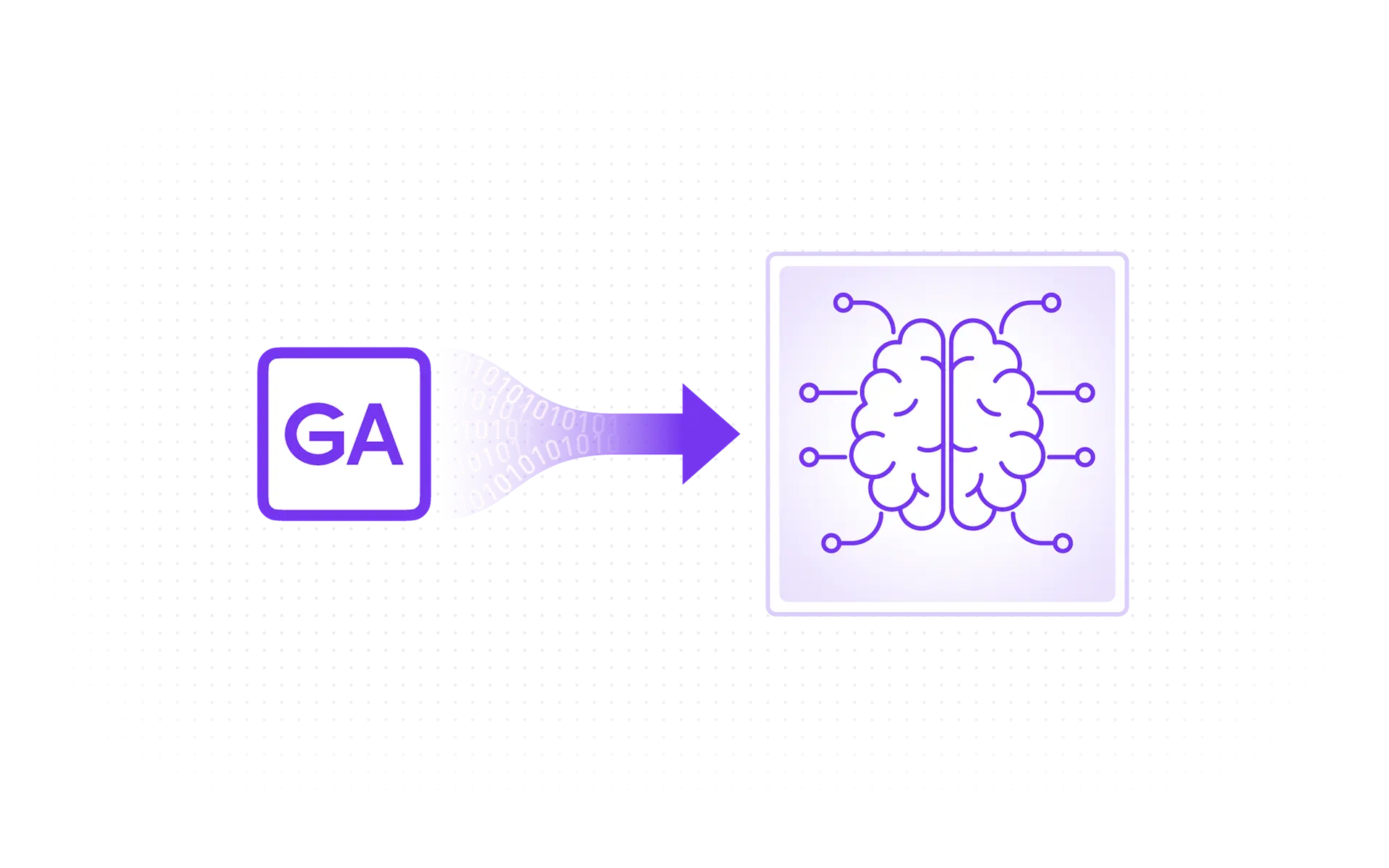
Train ML and AI models for churn prediction, pLTV modeling, player segmentation, and dynamic pricing with ready-to-train datasets. Build lookalike profiles and power smarter bidding strategies to spot and retain high-value users.
Advanced behavior analysis
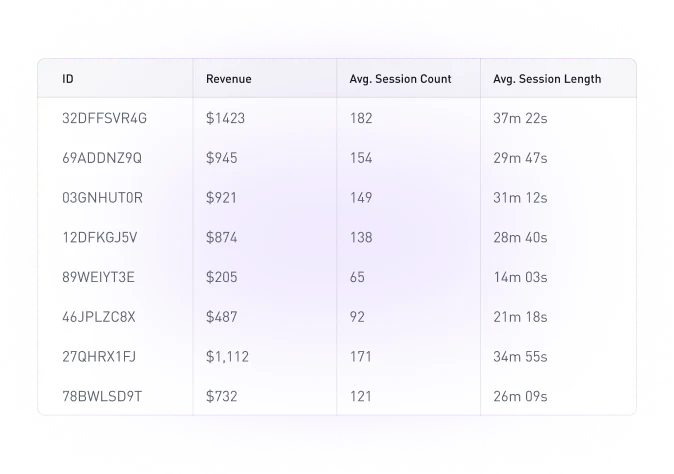
Dive into event level tables to see patterns in user interactions. Identify sequences that drive retention, analyze custom A/B test results, or discover links between specific events and ad views or IAP conversions.
Audience segmentation
Slice your audience by playtime, spend, progression, or currency usage. Build precise segments for re-engagement, cross-promotion, retargeting, or offers, and reach the right players every time.

User-level ROI analysis
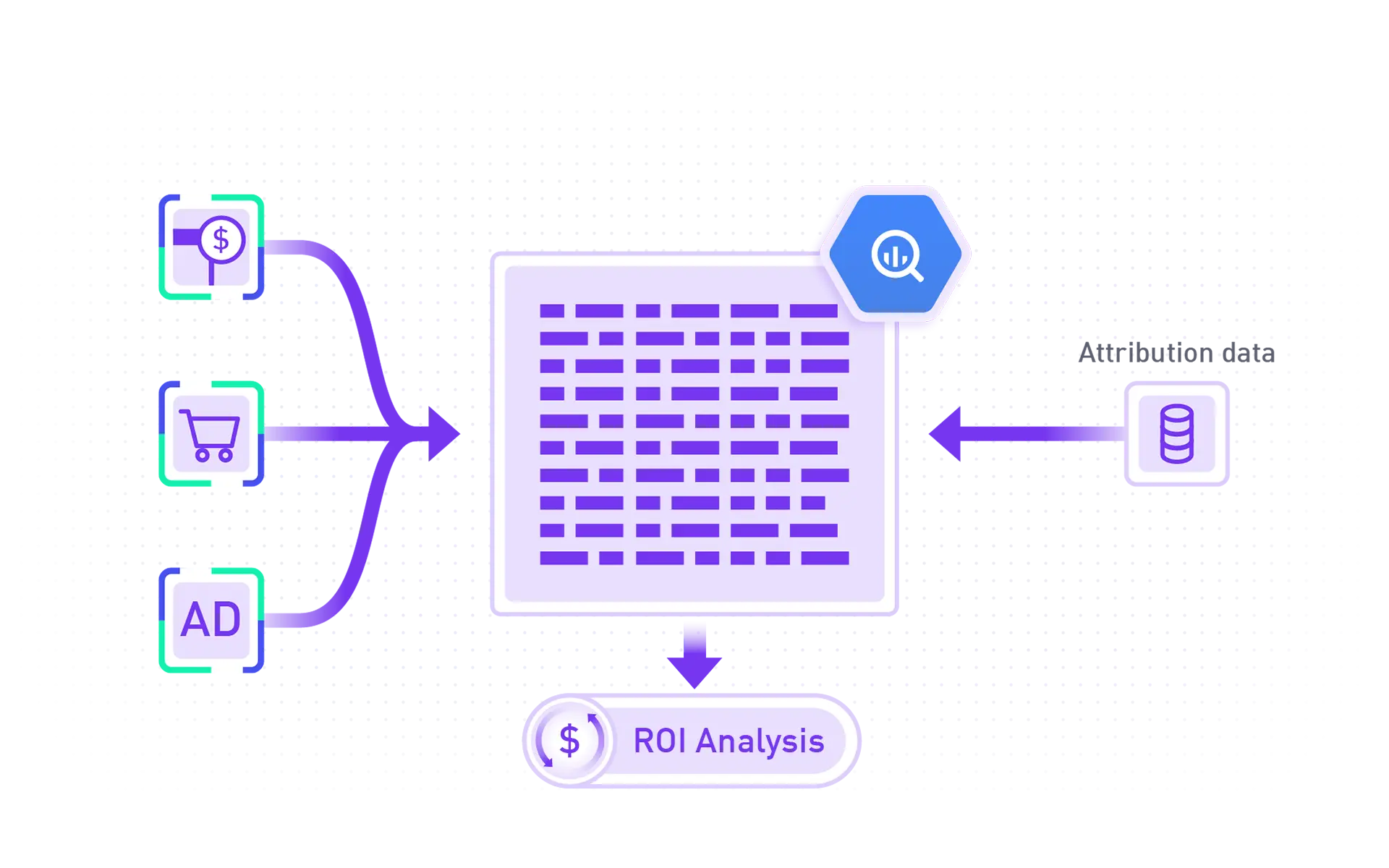
Merge device-level ad and IAP revenue with attribution or ad campaign data. Pinpoint profitable players, retain them with engaging LiveOps campaigns, or direct them to new titles to extend their lifetime value.
Cross-title & revenue validation
Track players across multiple games in your portfolio with shared identifiers. Validate in-game revenue against external sources (eg, attribution platforms) to ensure accuracy, consistency, and smarter decision-making.



.svg)


.svg)


.svg)
Game data pipeline: Building vs buying
As a large number of studios, publishers, and game developers are heavily relying on data to guide their decisions, they need to decide between building or buying. But which one is more efficient?
Get your free copy
Let’s get your data fully connected
Easily make your data accessible in any BI tool without the complexity of managing data capture, ETL or storage.



Frequently asked questions
What are the limits of events per user?
You have a limit of 500 events per user, per day (on average). This is typically sufficient for games across various platforms.
Note that if you exceed this limit, we will still collect the events. You’ll be notified that you’ve exceeded the limit and will be given time to address this.
Do we need to host the data ourselves?
With Data Warehouse, no. You do not need to host your data yourself - this is included in the full-package solution. You simply query what you need.
With Data Export, yes. Your data is exported to your cloud storage.
How can I set up my custom events?
See our documentation here regarding Design Events, and here regarding Custom Event Fields.
Please note that Design Events and Custom Event Fields are only stored and available to query once you become a PipelineIQ Pro customer. Data sent prior to becoming a customer will not be stored or populated in our PipelineIQ solutions.
How do you define unique users?
We measure by the count of distinct users that sent at least one event during the time period. For example, for MAU it would be the count of users that sent at least one event during a specific month.
How long is data retained?
See our documentation regarding data retention for Data Warehouse here. For Data Export, the data is subject to your internal data retention policies as it is hosted on your cloud storage.
Can I use the data in BI tools like Tableau?
Yes. With Data Warehouse, you can use the native connectors available in BigQuery or create a new one. With Data Export, you can set up your pipeline with the tools of your choice.
Talk to Sales
With Data Warehouse, your analysts gain a self-serve playground for deep insights - without waiting on engineers or building infrastructure. Ready to see it in action?